
Regenerative Architecture Index (RAI) 2026
Introduction
As part of our commitment to leading the way in advancing beyond ‘doing less bad’ towards making a positive impact, we successfully entered to become part of the 2026 Regenerative Architecture Index (RAI); a UK-based initiative led by Architecture Today in partnership with Architects Declare, designed to benchmark and celebrate built environment stakeholders’ progress in the move towards regenerative practice and projects.
The aim with RAI is to serve as a catalyst for sharing best practices, celebrating successes, and fostering a community committed to transformative change in how we design and work.
We wrote about how we work (our practice) and how our designs (our projects) align with the following three guiding principles:
- Being a good ancestor – designing and operating with future generations in mind
- Co-evolving with nature – aligning design an operations with ecological systems and natural flow
- Creating a just space for people – ensuring that equity, inclusion, and social value are central in our designs and operations

Completed in July 2026, the Theodore Roosevelt Presidential Library, North Dakota, USA, exemplifies applied systems-thinking and serves as a model of self-sufficiency. Pursuing Living Building Challenge certification, the project targets Zero Energy, Zero Water, Zero Emissions and Zero Waste, in addition to ecological restoration and optimal health & wellbeing.
Being a good ancestor
Our decisions today should consider the impact on several generations ahead, to ensure thriving human societies living in harmony with nature. This requires ‘third-horizon’ and innovative thinking, as holistic value and long-term benefits are rarely captured in current decision-making models.
Our practice
How our purpose, practice and culture align with the planetary emergency, embedding bold ambitions and long-term thinking.
Our mission is to lead the transformation to a regenerative built environment by providing environmental design and engineering solutions that lay the foundation for positive impact. We challenge conventional thinking and leverage the interplay between thriving ecosystems, human well-being and climate resilience to come up with holistic design solutions that generate multidimensional value to the wider society.
Our sustainability charter is built around six impact areas, recognising that regenerative outcomes emerge from their interdependence: Nature, Life, Society, Knowledge, Economy and Built environment. Nature sustains Life; Quality of life allows Societies to flourish; strong Societies develop Knowledge; sharing Knowledge is key to a resilient, thriving Economy. These areas are all foundational to achieving a regenerative Built Environment, which in turn supports them.
We also continue adhering to our philosophy of ‘Absolute Net Zero Carbon’, where we push our projects to achieve zero emissions from conception through operation without using carbon offsets.

Our succession plan to ensure our legacy and values are protected when passing on of ownership
After 35 years of advancing sustainable design, our founder Patrick Bellew made way for the next generation of Atelier Ten leadership to carry our mission forward. A new group of Atelier Ten leaders is now jointly taking on the responsibility of nurturing our ethos and culture across the wider team. Our founder remains actively involved as a Strategic Adviser, contributing to project reviews and design critiques to link decades of expertise with future innovation.
In 2020, we became part of Surbana Jurong (SJ), a global urban infrastructure, engineering, architecture and managed services firm. Despite our modest size, our role within this organisation of more than 16,500 professionals is to advise on and reinforce regenerative practices across the group, where Patrick served as Chief Sustainability Officer until January 2025. By continuing to nurture our culture locally, we aspire to remain the “chili in the stew” – influencing colleagues globally and lead by example to drive positive change at scale.
Our approach and strategy for sharing research and knowledge for the benefit of society and the wider world
Cutting-edge design solutions rooted in innovation and third horizon thinking require continuous research and curious minds. We cultivate this through our internal Practice Groups (e.g. Materials and Energy practices) and share insights through case studies/thought leadership pieces, speaking at conferences/seminars/technical symposiums and industry engagement.
Specific 2025/2026 initiatives are listed below:
- Implementation of quarterly thought leadership campaigns, where we gather leading voices in our industry for interdisciplinary roundtables/workshops, to drive change by tackling challenges and build opportunities though conversation, and share the outcomes with the wider industry. Our Q2 workshop takes place during our annual sustainability week ‘Regenerate’, where the aim is to create an outline design programme framework for unlocking regenerative outcomes.
- Delivered a module at AT’s School of Specification
- Participation in UKGBC Regenerative Places Framework Taskforce and NLA Technical Expert Panel
- Sharing excavated earth research through IStructE (a collaboration with DSDHA and Webb Yates)
- Running CPD sessions for collaborators & clients
- LCAW engagement through Liveable Cities Collaboration

Illustration of research on Structural Potential of Excavated Earth with DSDHA and Webb Yates.
Our projects
How we advocate for long-term thinking at the outset of projects
All our designs are guided by long-term thinking. We have a responsibility to champion design solutions that respond to site needs/context, minimise resource use and embrace adaptability and circularity to maximise design life, resilience and future-proof spaces and places to create intergenerational value.

WWF-UK Living Planet Centre
An example of ‘longevity by design’ is our collaboration with Hopkins on the WWF-UK Living Planet Centre, which won AT’s Test of Time Award (Workplace category) in 2025. Completed in 2013, the building was a pioneer in recognising embodied carbon as a key component of a holistic sustainability strategy. It has achieved significant reductions in energy use and operational carbon through innovative energy efficiency measures and on-site renewable energy. Rainwater collection and greywater recycling have reduced water demand and increased resilience to future water scarcity. Integrated with its context, the surrounding natural environment enhances biodiversity and public space – all shown to have improved staff satisfaction and wellbeing.
Our approach to climate resilient design
Resilience is a core design principle we employ across all our projects. Advocating for climate responsive, circular and resource-resilient design is a fundamental part of our daily work, to ensure future comfort, resource availability, energy independence and long-term asset value.
We do this by leading workshops on the holistic value of resilience, outlining what adaptive, resource-conscious and circular design means in practice, the benefits for people, society and planet and its importance in future-proofing client portfolios (mitigating physical and financial risk). We then inform the design through detailed computational analysis, optimising performance and comfort in response to both current and future climate conditions.
Specific design strategies are tailored to the project’s site context and climate, but the key resilience outcomes remain consistent: thermal comfort, ‘walkability’, energy and water security, as well as multi-functional nature-based solutions such as drought-resistant, carbon-capturing landscapes that function as Sustainable Drainage Systems (SuDS).

Illustration of masterplan-wide sustainability strategies anchored in climate resilience, including multi-functional, nature based solutions where green recreational spaces is part of storm water management.
How we move from minimising negatives to optimising positives
Our ambition is to achieve positive and regenerative outcomes across all our projects. This can only be achieved by responding to specific needs of each site. We identify key priority areas based on current and projected environmental challenges and socio-economic context, on which we base our systemic sustainability strategies. Every project is different, and maintaining a holistic perspective allows us to leverage interdependencies, and respond to unique challenges and opportunities. We draw on a comprehensive toolbox, combining quantitative and qualitative analysis, to support this.
Examples include implementing innovative water capture, reuse and recycling strategies in arid climates to strengthen depleted water wells and societal resilience; adopting site-wide ‘waste-to-value’ approaches that generate multiple value streams (electricity, biogas, fertilisers, fodder, up-cycled materials), and applying ecological engineering principles that let nature regenerate itself by creating conditions conducive to life. We don’t fight nature, we learn from it to strengthen natural systems and cycles.
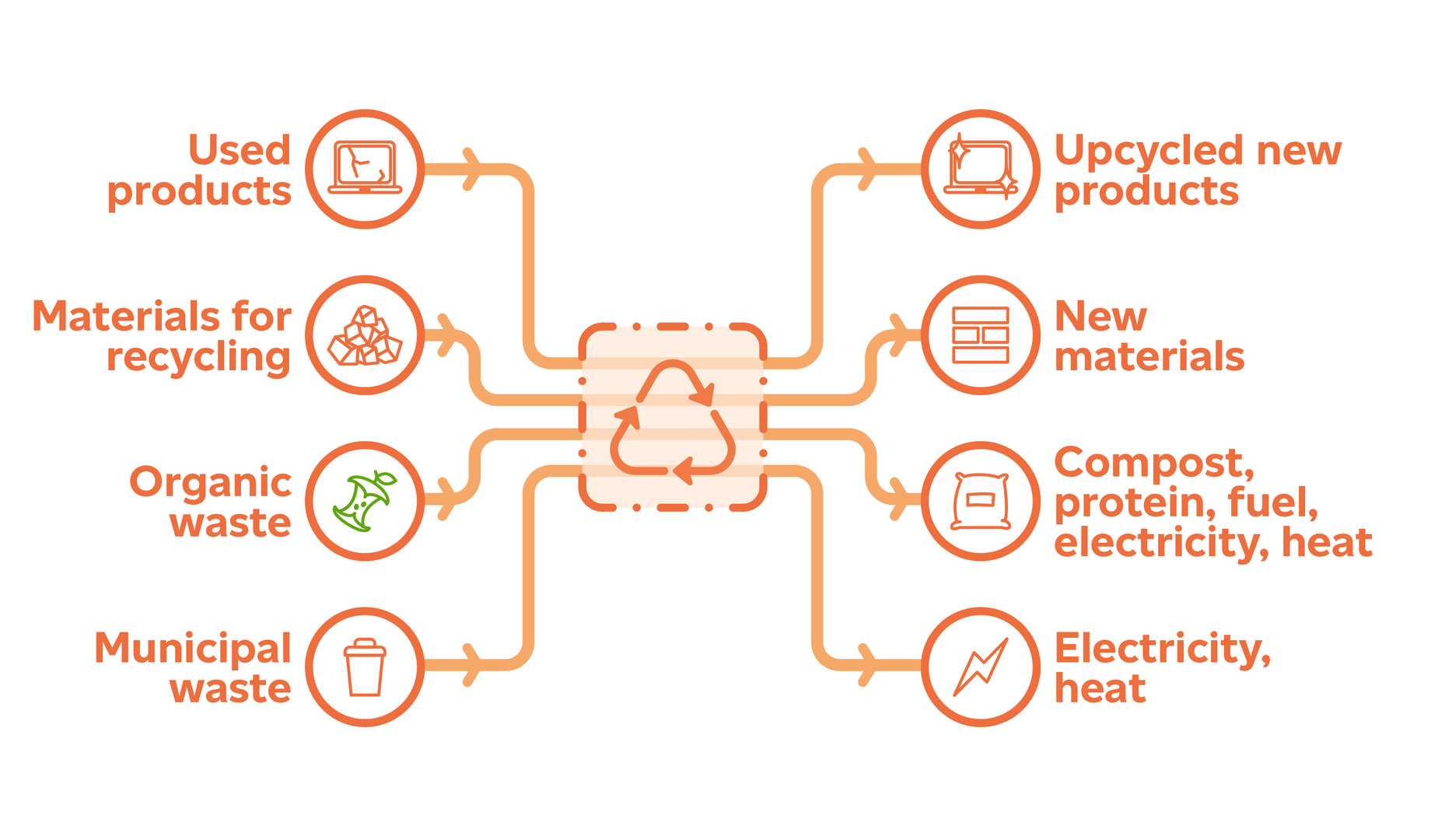
Adopting a ‘waste-to-value’ approach
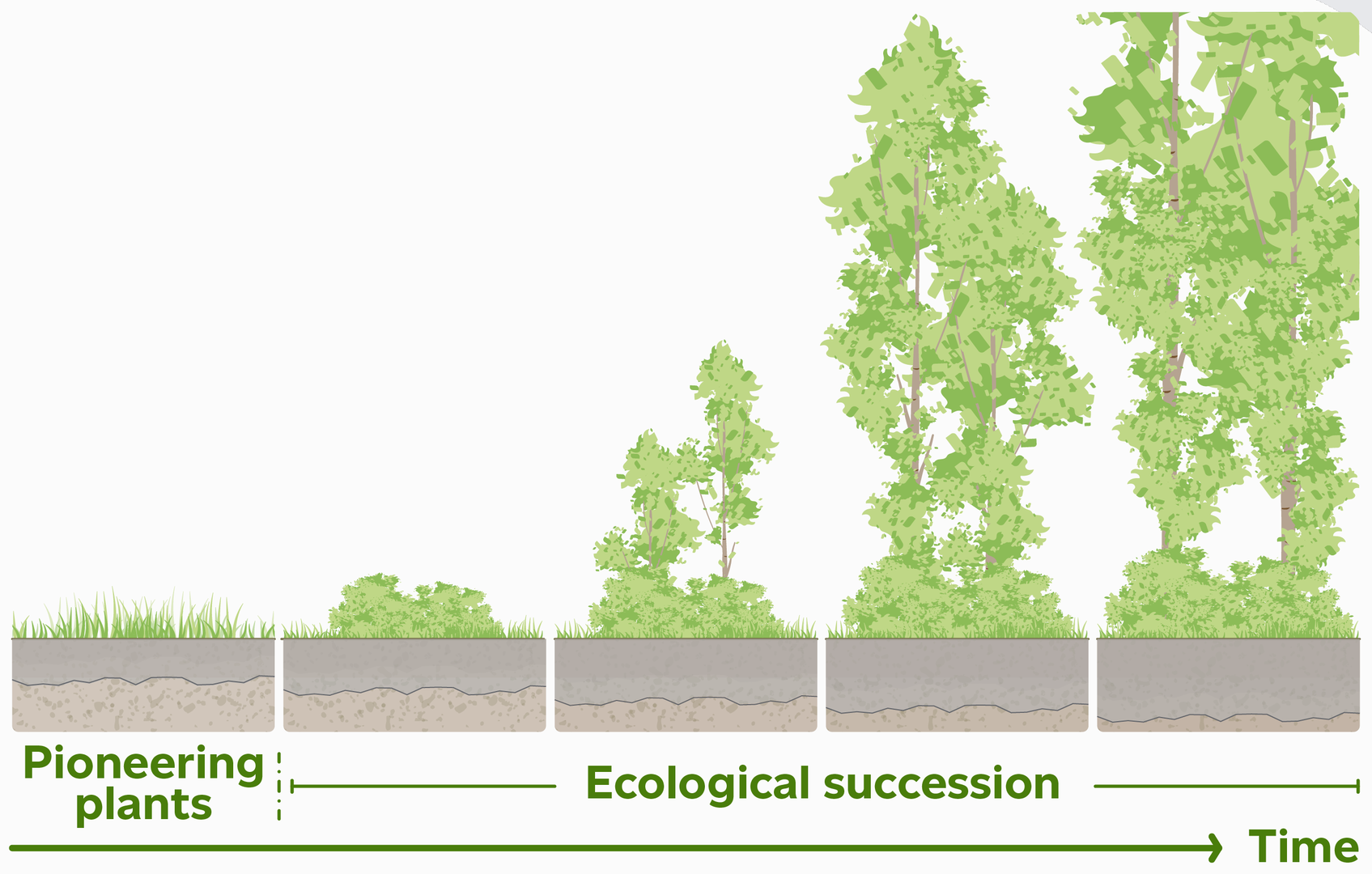
Ecological engineering – allowing nature to regenerate itself by creating conditions conducive to life.
Co-evolving with nature
We recognise that we are part of nature – an interconnected living system – not separate from it. Our work should actively highlight the co-benefits of healthy ecosystems on human well-being, global economy and society as a whole. We take pride in learning from nature, as well as leveraging nature’s ingenuity, by working with the land and natural flows, not against them.
Our practice
How we encourage exposure to nature in our practice and culture, as a mean for stress-relief and staff well-being
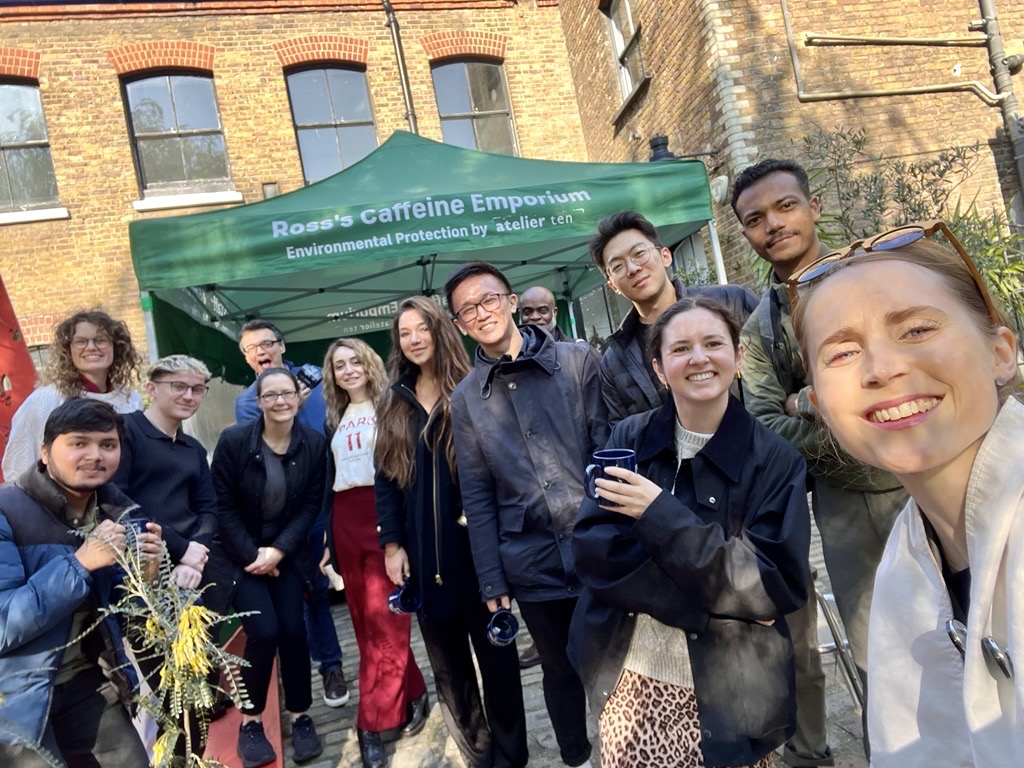
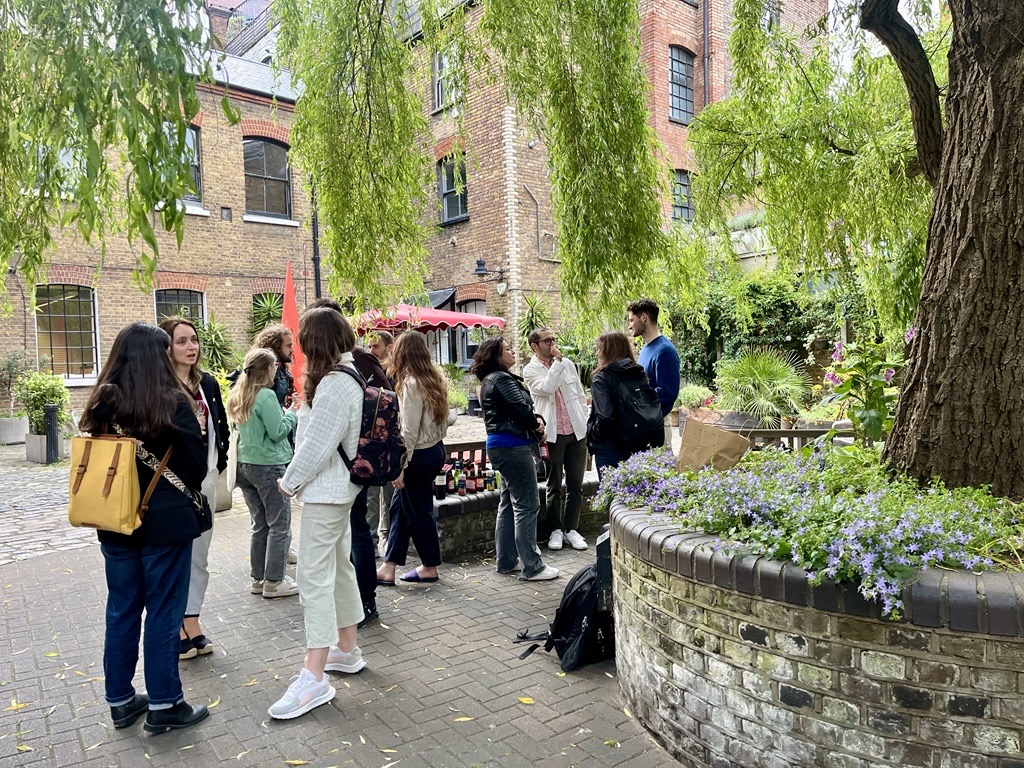
We recognise the importance of connection to nature for human comfort and well-being and have therefore made a conscious effort to integrate biophilic principles throughout our offices. In London we are also fortunate to share a tranquil courtyard with fellow creative practices, centred around a majestic willow tree, lush planting and an outdoor barista. We actively encourage staff to use this space for informal meetings, socialising, and taking restorative breaks. More specifically, ‘coffee calls’ have become embedded in our culture, bringing team members together outdoors over coffee. Our offices also benefit from abundant natural daylight and views onto the courtyard.
We further promote wellbeing through a range of after-work activities that connect people with nature. Our running club meets weekly, while our Tuesday yoga sessions move to a rooftop setting during favourable weather, providing opportunities for exercise, social connection and time outdoors.
How we employ eco-centric decision making
Preserving and enhancing nature in our built environment is central to our decision making, both in our designs and operations, as we recognise the interdependence of thriving ecosystems, human wellbeing and climate resilience as a prerequisite for regenerative outcomes.
In projects, we follow a framework called The Living Story, developed by our Director of Biomimicry and Regenerative Design, Jamie Miller. Anchored in one simple question ‘How would Nature lead design?’, we ask ourselves what the land wants to do, allow us to do and support us in doing. The natural context becomes a living brief, where topography, seasonal cycles, hydrological and ecological flows author the design rather than being treated as constraints. To become regenerative, we must understand what we are regenerating.
In our practice, we use eco-labelled cleaning products, responsibly sourced paper and renewable electricity. Our US office also offers a summer schedule to take advantage of longer days.
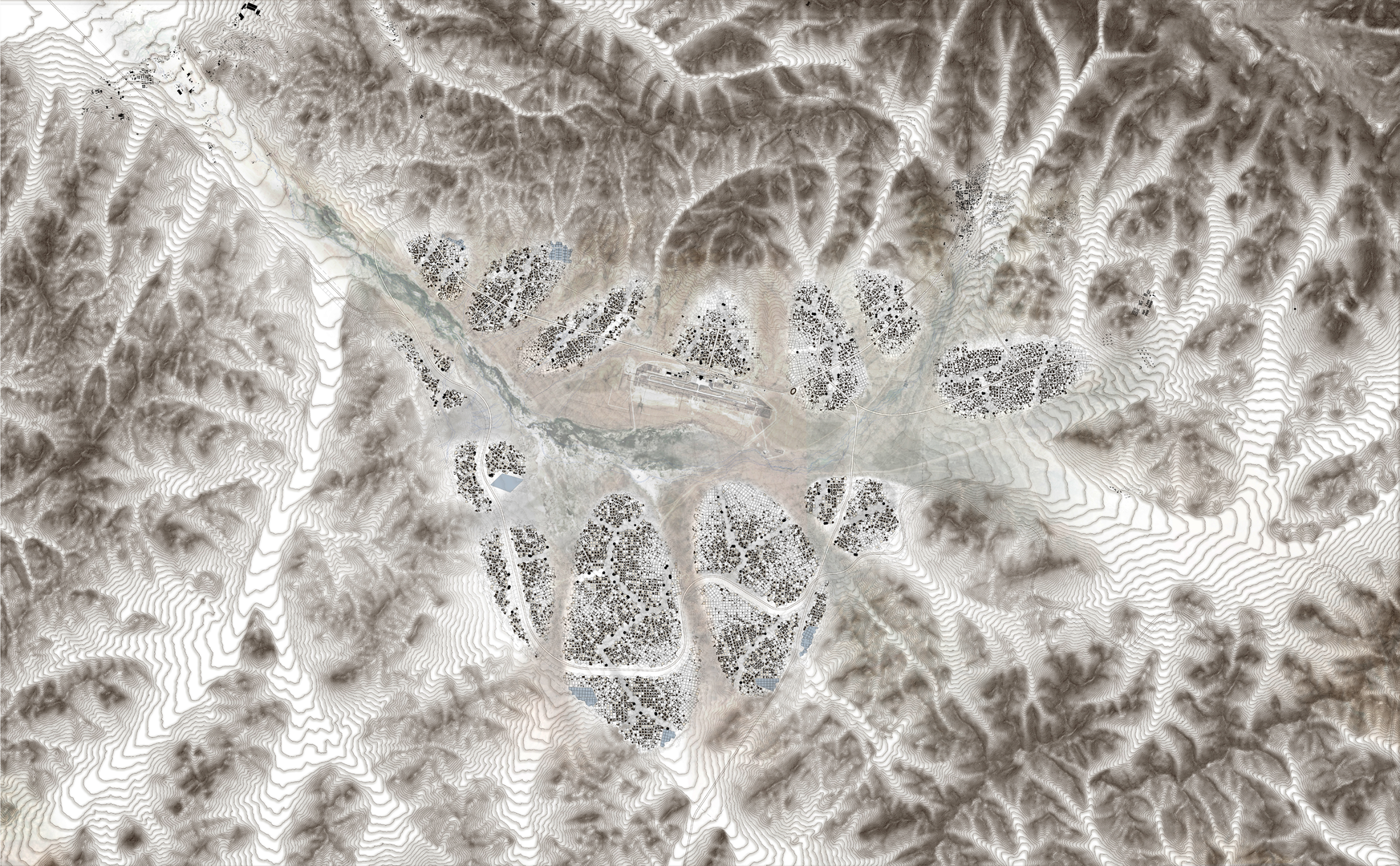
The Living Story , Hunnu City Mongolia – following the flows of water and ecology, creating nodes of constellations that fit the landscape.
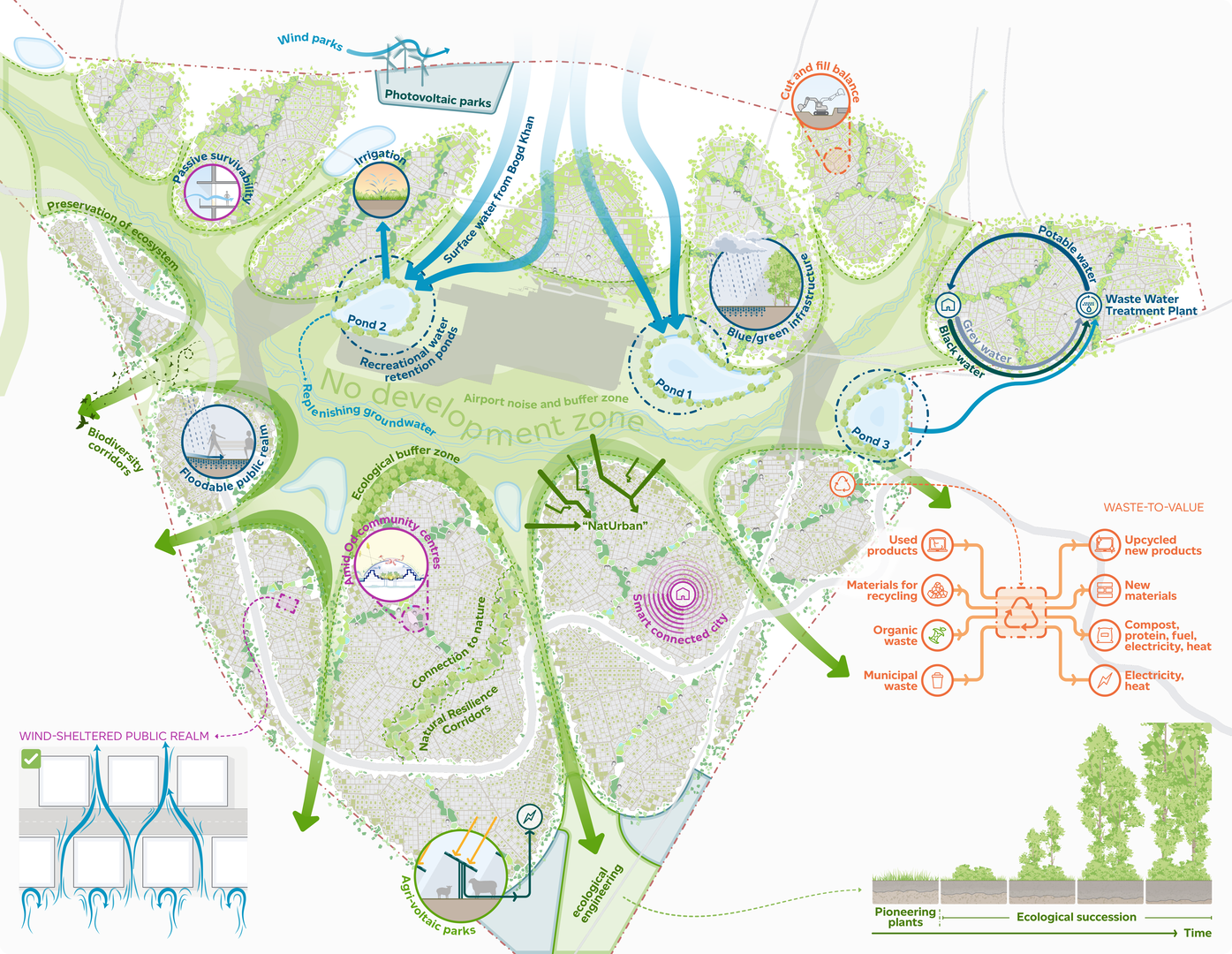
Illustration of regenerative design strategies for Hunnu City – a global exemplar of regenerative and resilient urbanism; a city born from Mongolian soil, its history, natural cycles and living wisdom, designed to evolve like a living organism.
Our projects
How our projects strive to match the performance of a mature ecosystem
We don’t only strive to maximise Biodiversity Net Gain across our projects – we take a holistic approach, considering the functional role of nature in design. This includes identifying key ecosystem services our projects can support, such as air purification, water retention/recycling and soil regeneration. We also design spaces specifically for plants, collaborating closely with landscape architects.
Project examples:
- Hunnu City, Mongolia: Masterplan designed to create conditions conducive to life through ecological succession; allowing life to build up biomass and soil stability naturally, encouraging symbiotic plant relationships and permaculture.
- EDEN, Dundee: Former industrial site transformed into a self-sustaining, remediating ecosystem.
- Eden, Manchester: Europe’s largest green façade – 350,000 plants absorbing carbon, improving air-quality, and harvesting rainwater.
- Google Platform 37, London: A ‘landscraper’ topped with habitats for native plants and protected animal species (open lawns, wildflower meadows, large trees).
Projects designed for plants: Gardens by the Bay and Jewel Changi Airport in Singapore, Alpine House in Kew Gardens, Woolbeding Glasshouse.

Gardens by The Bay, Singapore: Shortlisted for Architecture Today’s Standing Test of Time awards 2026
Our approach to material stewardship: low carbon materials, responsible use of materials and elimination of waste
Alongside industry-collaborative research on e.g. excavated earth with DSDHA + Webb Yates, we undertake comprehensive pre-redevelopment audits for projects with existing buildings on site, to help clients make informed decisions on retention strategies that maximise whole life carbon benefits and minimise resource use.
In addition to leading material workshops focused on efficiency, durability and circularity, we translate these discussions into tangible project actions through two key tools.
- Circularity Materials & Design Tracker: A bespoke tool developed to ensure circularity ambitions are delivered in practice. Using findings from pre-demolition audits as a design brief, it guides project teams to respond to identified reuse opportunities. Once agreed with the client, the tracker forms part of the demolition contractor’s tender package.
- Whole Life Carbon Assessments: We evaluate low-carbon and circular material options, engage suppliers in reuse and secondary markets, and produce interactive embodied carbon analyses that map reduction opportunities alongside cost, risk and programme implications.
Our approach to biologically-inspired design and nature based solutions
We don’t fight nature, we learn from it. We recognise that that the most efficient design principles emerge from the ingenuity of natural forms, processes and systems – by applying biomimicry, we optimise performance and embed system-thinking in our designs. In nature, there are no red-line boundaries. This is our lens for evaluating impact of our solutions.
We design with, rather than for nature. In every project, we work with local climate and environment to harness the power of ecological (“free”) engineering and ecosystem services to increase efficiency and minimise resource demand.
Examples include the Theodore Roosevelt Presidential Library, USA, where an earth-sheltered structure and biodiverse roof provide protection from winter winds while grazing supports ecological restoration.
Along with Oriental EDEN Qingdao, China, where water-flows informed the masterplan and infrastructure design, The Esplanade, Singapore, with shading inspired by the durian fruit, and Federation Square, Australia, whose thermal labyrinth draws inspiration from termite mound ventilation.

Theodore Roosevelt Presidential Library

The Esplanade

Inspired by the self-regulating ventilation systems of termite mounds, Federation Square’s thermal labyrinth uses thermal mass to capture cool night-time air to reduce temperatures on hot days without mechanical cooling. This biomimetic approach reduces reliance on mechanical systems, improves energy efficiency and maintain thermal comfort year-round.
Creating a just place for people
Social connection, economic opportunity and wellbeing for all are corner-stones in our value-matrix. Our design processes should foster a shared sense of stewardship where neighbourhoods can self-organise and build their resilience. This requires ethical, inclusive and participatory approaches.
Our practice
Our progressive EDI policy
As a team of diverse nationalities and backgrounds, our Equity, Diversity, Inclusion, and Belonging (EDIB) group plays an active and influential role within the practice. In London, the EDIB group advises the board on maintaining and enhancing inclusive practices, drawing on insights from regular Diversity and Inclusion surveys. Our New York office is a Just Certified company under the International Living Futures Institute, consistently receiving top-marks for diversity, inclusion, wellbeing and gender-pay equity.
- Mental health and well-being platform providing resources on stress-management and guidance on dealing with discriminatory behaviour.
- EDIB calendar highlighting religious and non-religious holidays and cultural events.
- Culture Days’ where staff are invited to bring food/items that reflect their cultural identity.
- Educational talks/training on e.g. ‘Autism and Neurodiversity’ to foster an environment where everyone feels valued and can be their authentic selves.
- Increasing awareness of stress factors/management practices that reduce root causes of stress at work.

Atelier Ten Culture Day celebration.
Our approach to overtime, Living Wage and fair salary ratios between staff of all levels
We meet Living Wage requirements and regularly benchmark salaries across all levels against industry standards to support fair and equitable compensation. While we do not encourage overtime as a standard practice, we operate in a deadline driven sector which means that our teams sometimes work longer than their contracted hours a given week.
When that happens, we have Time-Off-In-Lieu policies in place and monitor all our staff’s time to ensure that nobody is overstretched. We remain attentive to workload concerns and engage in open discussions when issues are raised – ensuring a balanced and supportive working environment. In our New York office, our Just Certification under the International Living Futures Institute includes requirements on living wage, gender-pay equity and pay-scale equity.
Our support of charities and community groups
We reinvest a portion of our profits into Atelier Ten Foundation, a foundation that enables our staff to apply their skills to humanitarian work, creating lasting positive impact and empowering others to improve the built environment globally. Examples include capacity building of sustainable-schools building in Zambia and Uganda with Promoting Equality in African Schools (PEAS), renewable energy and water systems in Haiti and solar-powered lighting for village schools in Nepal.

Atelier Ten foundation project: Solar-powered lighting for village schools in Nepal.
To mark Black History Month, we celebrate and support the local, black female-owned business Dark Sugars chocolatier. For Pride month, we raise money for our local LGBTQIA+ charity, Rainbow Mind, through team initiatives and fundraising.
This year, we extended our charity work by joining forces with clients and collaborators, supporting Action for Children, NSPCC through their charity walk and quiz, and celebrated World Earth Day at Global Generation’s Paper Garden.
Our approach to assessing opportunities in line with ethical frameworks & inclusivity
We follow a set of ethical principles that help guide the type of work we take on. Where there is uncertainty or concern, we foster a culture of openness where all voices are welcomed and respected. We are transparent in our decision-making and open to discussing the reasoning behind go/no-go choices as dialogue is important to us.
Our New York office works in alignment with the Design for Freedom framework and advises project teams on incorporating an Ethical Design Requirements specification section for materials with elevated risks of forced labour within their supply chains. We also develop procurement strategies that prioritise verified ethically sourced products, while identifying opportunities for supplier engagement, advocacy and industry outreach where appropriate.
Our projects
How our projects support deep engagement with local stakeholders and end users

Project Phoenix, Lewes
We’re convinced that co-design with local stakeholders is essential to the long-term success of any project. As designers, we must understand the needs and values of the community to foster a sense of belonging, encourage stewardship, and maintain a strong social license to operate.
In our Sustainability Implementation Plan (SIP) processes, we engage with a wide range of stakeholders to ensure that key interests are heard and concerns addressed early. This becomes particularly vital – and often more complex – in regenerative masterplanning, where meaningful collaboration is foundational. A strong example is Project Phoenix in Lewes.
From the outset, our client Human Nature developed and employed an exemplar ‘Circular engagement system’, built on principles of continuous involvement of local residents, interest groups and specialist practitioners. With an emphasis on participatory design, transparent communication, and community activation (festivals, concerts, exhibitions), Project Phoenix moves beyond traditional consultation – shifting from asking questions to actively responding through co-design.
Our approach to creating connected and resilient places which positively contribute to their neighbourhoods
We believe a genuine sense of belonging is fundamental to fostering community stewardship and long-term resilience. Emerging from inclusive design and meaningful local engagement, this delivers social value while laying the foundation for lasting environmental and economic prosperity.
We consistently advocate for design solutions that generate social and intergenerational value, even in the most unexpected contexts. An example of this is Chelsea Barracks, a high-end residential development where we successfully championed public access and permeability – ensuring that the site’s gardens remain open to the wider community. Unlike many nearby private squares that remain gated and exclusive, these green spaces welcome neighbours and visitors alike, helping the development integrate meaningfully into the local urban fabric.
In our masterplan projects in hotter climates, we undertake walkability studies and UTCI analysis to inform outdoor thermal comfort strategies, enabling walkable, connected and people-centred urban environments.
How our projects promote equity in society and consider all people involved in a project
We’re passionate about championing the health and wellbeing of those building our projects – not just those who occupy them. We actively advocate for construction worker welfare and push for local apprenticeship schemes that create pathways into the industry.
A great example is our Norton Folgate project, where we went beyond the standard approach by embedding a dedicated section on worker wellbeing into the Employer’s Sustainability Requirements – ensuring that care for people on site was treated as a core project value, not an afterthought.

Norton Folgate

Norton Folgate
When it comes to societal value, the public realm around Space House, originally designed for car users, has now been converted into a more welcoming environment that encourage people to dwell. Perimeter guardrails have been removed, and the former car ramp transformed into a large event space available for public hire.

Space House
Concluding reflections
The barriers to transitioning to a regenerative built environment
The multidimensional value created through regenerative approaches is rarely reflected in investment decisions. Regenerative design generates substantial environmental, social and economic benefits, yet many of these accrue to society, nature and future generations rather than directly to investors. As a result, there is often limited incentive to prioritise regenerative solutions, particularly where the benefits are not captured by those making the investment decisions, despite their potential to generate holistic long-term value. The million-pound question becomes: How to translate value distributed across multiple beneficiaries into investment decisions?
A further challenge is that regenerative outcomes emerge over extended timescales, requiring investors and developers to adopt a long-term perspective on return on investment. Current market structures, however, tend to prioritise shorter payback periods and near-term financial performance.
Addressing this challenge will require new ways of recognising societal value within investment frameworks, alongside broader collaboration across stakeholders to align decision-making with long-term, system-wide benefits.