
Advancing Sustainable Healthcare for the Future of Care
Healthcare is undergoing a fundamental shift. Consolidation, campus densification, workforce strain, and aggressive decarbonization targets are reshaping how facilities are planned and operated. Meanwhile, expectations for patient and staff experience continue to rise, often in tension with tightening capital and operating budgets.
As a result, the design brief has moved well beyond meeting code and accommodating equipment. Today’s high performing healthcare environments must support patient and staff wellbeing, operational resilience, and adaptability, while also controlling long-term costs. When these priorities are aligned, wellbeing becomes a driver of value that improves outcomes, reduces risk, and extends the usefulness of facilities.
Atelier Ten has been at the forefront of this transformation, working as a key partner with owners and design teams from early planning through delivery to help translate these ambitions into practical, implementable solutions.
Below, our US healthcare leads, Leanora Paniccia and Amy Leedham share insights on three trends shaping the future of sustainable healthcare facilities.
Future‑Proofing Healthcare Facilities: Unlocking Value in the Face of Rising Costs
With rising construction costs and aging infrastructure, many healthcare systems are reevaluating how to invest in their existing assets.
Futureproofing begins with disciplined planning, evaluating building condition, system capacity, operational constraints, and longterm campus priorities before capital decisions are made. When approached strategically, renovation and adaptive reuse offer a powerful way to unlock value by reducing embodied carbon, minimizing disruption, and extending the service life of campuses, while still improving patient and staff experience.
Designing for flexibility is central to this approach. Adaptable layouts, modular systems, and rightsized infrastructure allow facilities to respond to evolving care models, technology, and patient needs without costly future retrofits. Implementing sustainable design principles into renovations can breathe new life into outdated structures and ensure they meet modern needs without the massive environmental impact of demolition and new construction. A modest upfront investment in flexibility can significantly reduce future risk and expense.
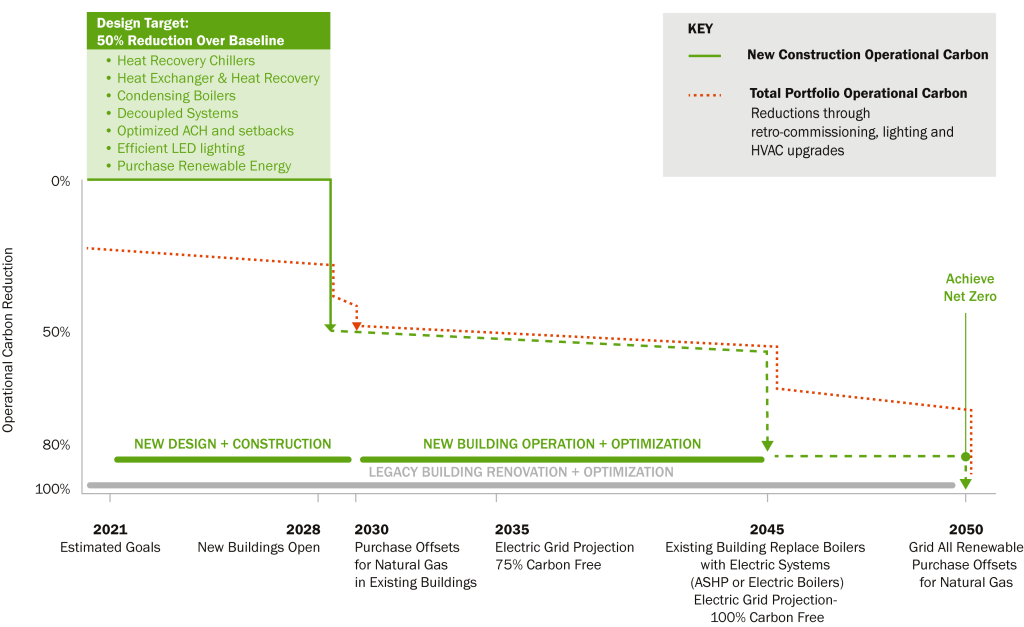
In the figure above, Atelier Ten worked with a confidential client to develop a practical roadmap for both new and existing assets to implement strategic electrification, resilient energy systems, and lower-carbon development that supports patient care while preparing their campus for a rapidly changing energy future. Using energy and carbon modeling, we identified pathways to transition campus energy systems, reduce operational emissions, and lower the embodied carbon of construction, renovations, and retrofits.
Photography: Jeff Goldberg / Esto
Case Study: NYU Langone
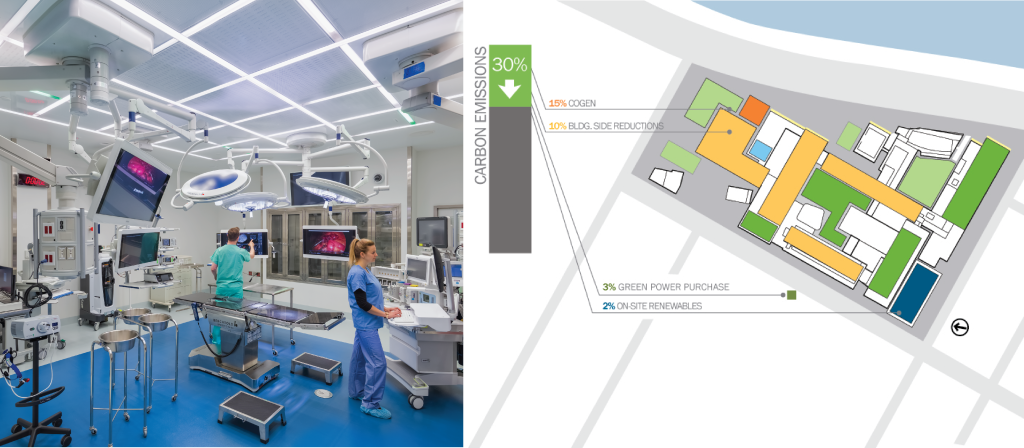
NYU Langone faced aging infrastructure across their portfolio. Atelier Ten worked closely with the hospital to develop a clear roadmap for integrating sustainability in their new construction and strategic renovations. Atelier Ten’s work on NYUL Kimmel Pavillion built off the sustainability roadmap and showcases how adaptable spaces can account for future advancements.
Decarbonization Planning that Supports Patient Care
Healthcare campuses face growing pressure to reduce emissions, modernize aging infrastructure, and manage rising energy costs, all while maintaining reliable, comfortable environments for patients and staff.
Because “net zero” targets can feel abstract when disconnected from day-to-day operations. Healthcare systems need clear, implementable pathways that align decarbonization with clinical priorities, occupant wellbeing, and long-term value.
Integrating decarbonization strategies from the earliest design stages supports reductions in Scope 1, 2, and 3 emissions while maximizing co-benefits such as enhanced thermal comfort, air quality, and operational resilience. This approach makes carbon reduction more tangible and easier to embed in decision making, resulting in right-sized infrastructure, proactive planning for electrification and grid constraints, and avoidance of stranded assets. The outcome is a more resilient, efficient portfolio that support both human health and long-term financial performance.
Photography: Edward Caruso Photography
Case Study: Ruth Bader Ginsberg Hospital
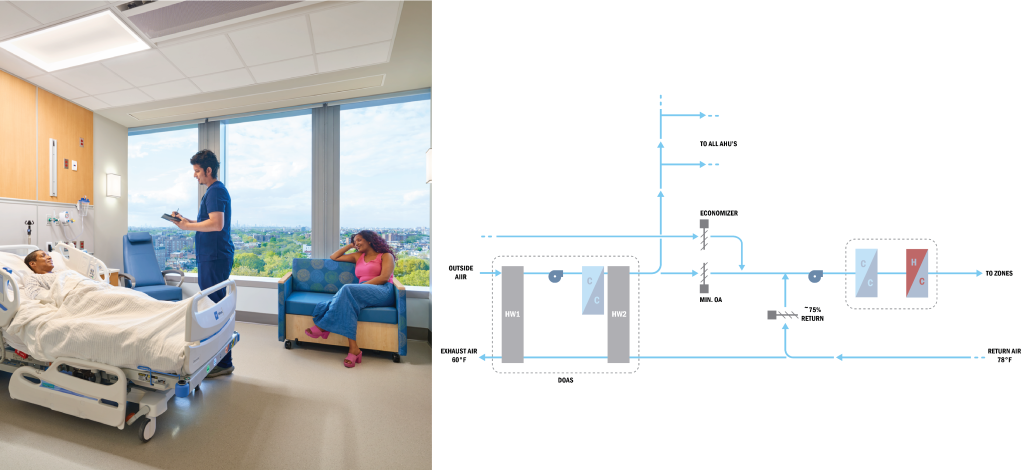
Coney Island Hospital is among a select group of U.S. healthcare facilities utilizing chilled beams in patient rooms, demonstrating a forward-thinking commitment to comfort, efficiency, and innovation. The chilled beam system, integrated with dual-wheel ventilation, nearly eliminates dehumidification and reheat while allowing downsized heating and cooling coils, saving space, carbon, and reducing initial capital costs.
From Sustainable to Regenerative: Designing Healthcare Environments that Heal People and Place
Sustainable healthcare design is evolving beyond minimizing harm toward regenerative approaches that actively contribute to ecological health and human wellbeing.
This shift recognizes that environments supporting nature, comfort, and restoration can also drive institutional value, improving patient experience, supporting staff retention, and strengthening community connection.
Access to daylight, views of nature, outdoor amenities, and biophilic strategies are no longer “nice to have.” They are integral to creating environments that help people heal, work, and recover from stress while improving site performance and resilience at the campus scale.

Case Study: Penn Medicine Radnor Ambulatory Care Center
Transforming a former suburban office park into a nature anchored ambulatory care campus, the project actively restores ecological systems and enhances human wellbeing. Atelier Ten worked with the design team to identify strategies that restore site performance, while meeting operational needs. Surrounding meadows, rain gardens, and native plantings regenerate habitat, manage stormwater on site, and create a lush network of restorative outdoor spaces.