From Presence to Power: Redefining Leadership and Influence in the Built Environment
by Jessica Glynn, Associate at Atelier Ten & Chair of CIBSE WiBSE
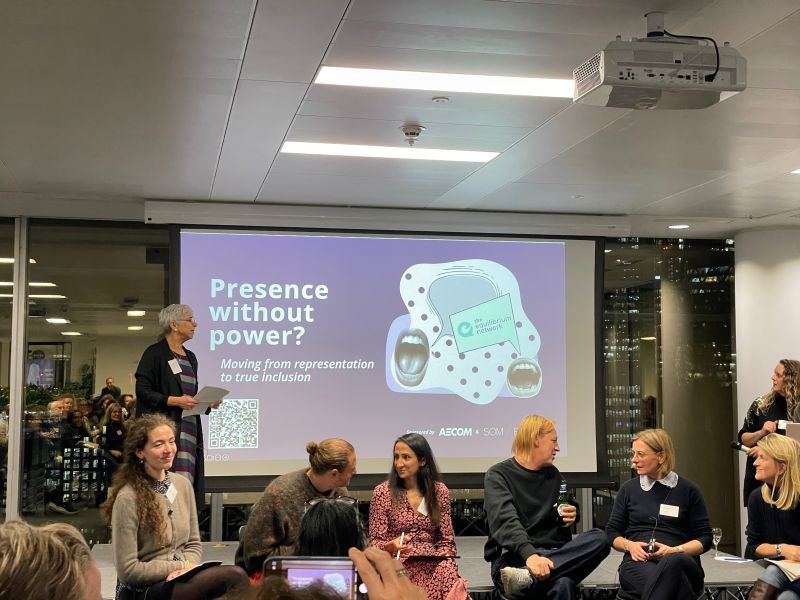
Ten years ago, the Equilibrium Network launched with a provocative question: Does it matter that women are not involved in decision-making at the top of our industry? At this year’s anniversary event, I joined a panel discussion which revisited that question with a new twist: Presence without Power? Have representation gains over the past decade translated into meaningful influence?
As a passionate advocate for equality, diversity, inclusion, and belonging I found myself reflecting on the evolving landscape for women in the built environment. The outlook within the room was mixed. Some felt momentum had stalled after initial progress. Others questioned whether performative representation, could still be a catalyst for long-term change. It was a nuanced conversation, one that revealed how far we’ve come and how far we still have to go.
Representation: Catalyst or cul-de-sac?
Representation matters. It shifts the image of who leads, who belongs, and who builds. As Emma Cariaga of British Land noted during the discussion: “You can’t be what you can’t see.” But visibility alone is not power. Power is the ability to shape outcomes, to set agendas, to redirect resources. And in our sector, that power still remains largely concentrated.
This distinction between presence and power plays out not only in corporate structures but also in design outcomes. Diverse teams don’t just tick the box to make up the numbers on an org chart. They ask different questions, and surface perspectives others may miss. I’ve seen it in practice, from external lighting design that prioritises safety through a gendered lens, to accessible facilities designed with real-world users in mind, not just regulatory checklists.
One of the most debated topics on the night was tokenism. Is it ever acceptable to start with a gesture that is mostly symbolic if it helps to unlock real change later on? Possibly. But it can also create a thin layer of inclusion on the surface while the deeper structures stay the same. A small number of people may benefit. Yet the way power is shared, who gets opportunities and how decisions are made can remain largely unchanged.
Performative inclusion can still favour those already closest to opportunity, often white women. Visibility must translate into wider access, not a handful of individual success stories. The aim is a workplace where fair chances are built into the culture and leadership philosophy, not just written into policy.
Why lived experience shapes better design
In the debate, we touched on how design choices are informed by lived experience. In many built environments, dominant perspectives shape spatial norms — from transport nodes to workplace amenities. When those at the table all share similar backgrounds, we miss the nuances of how others use space, move through it, or feel safe within it.

Shifting culture through participation and mentorship
As Chair of CIBSE’s Women in Building Services Engineering (WiBSE) panel, I’ve seen firsthand how global networks can drive systemic impact. Through WiBSE, we are working to ensure that inclusion is benchmarked and embedded in professional standards, and institutional practice.
Some of the idea’s we’re looking to roll out within our project teams at Atelier Ten are related to meeting dynamics. Small changes like inviting junior team members to speak early on to engage their views. Another tactic is to create a safe environment for healthy discourse, assigning and rotating a “leader of the opposition” to constructively challenge consensus thinking. These techniques are cultural nudges toward equity.
Looking ahead
Moving from presence to power means rethinking influence. Influence is not control over others; it is the ability to include and empower. Sometimes that means giving something up, whether that is airtime, status or certainty, so that others can step forward.
It also means moving from representation to responsibility. The women who do occupy leadership roles have a responsibility to use their influence to reshape norms, redistribute opportunity and challenge structures that limit broader inclusion. That responsibility does not, and should not, sit with women alone. Men in senior roles, and others who benefit from existing systems, also need to consider how they share influence, sponsor others and change the conditions for those coming through.
Equilibrium is not just a name. It is a call to action for those with power to think carefully about how we use it, and who we invite to share it. We need more voices at the table, but we also need to redesign the table and the room it sits in. The work is not done when a panel looks balanced by gender. It continues in how decisions are made, whose voices are trusted and what legacies we choose to build.