
Next Gen of Atelier Ten – Public Health
by Mila Robins, Environmental Designer
Read time: 8 minutes
In the last article we were joined by Manthan from our electrical engineering team at Atelier Ten London. In this edition we are joined by two public health (PH) engineers to complete the MEP trifecta.
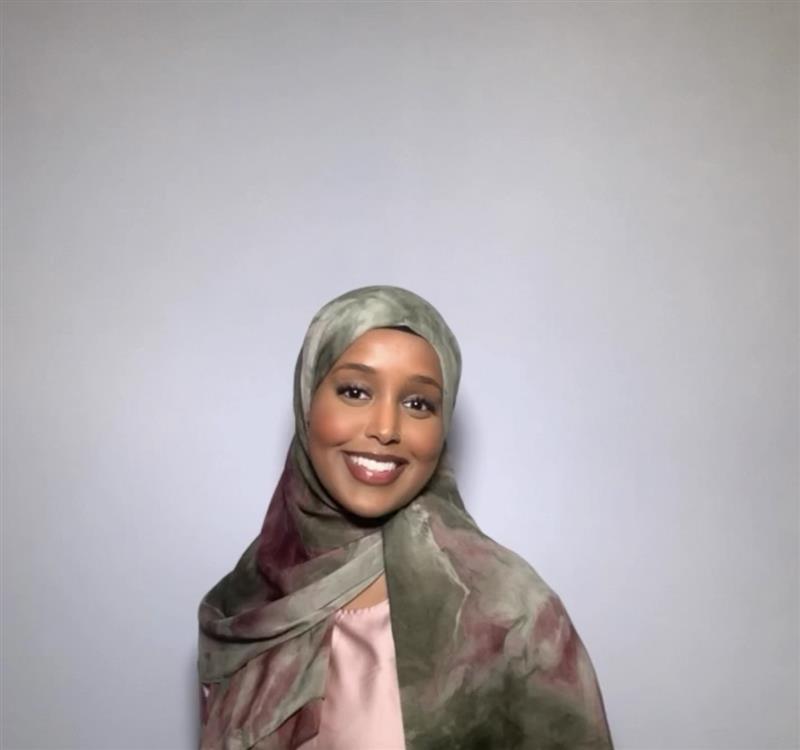
Aisha studied mechanical engineering at university. In her first couple years she was convinced to work in a similar field or even pursue aerospace. However, in her third year she took a sustainability module – her first nudge towards Atelier Ten. After this she began to research renewables and decided to study a masters in sustainable engineering in Cardiff. Post-graduation, she found the public health role at Atelier Ten which aligned with her undergraduate and master’s studies.

Jaidan has an undergraduate background in biomedical sciences. He spent three years doing long hours in the lab and studying everything at the microscale. After finishing he wanted more practical and applied experience in engineering and business. He stayed at Imperial for a master’s in chemical engineering, exposed to a lot more on processes, heat networks, and became enamoured with engineering problem solving. Having completed his dissertation on water contaminants and public heath, he found Atelier Ten’s opening for a PH engineer. There are lots of overlaps with the water engineering he does now: supply and drainage, monitoring, and testing, and storage.
So, without further delay, can you guys give me the ‘too long didn’t read’ explanation… what is PH?
Aisha:
The simple answer I give my friends is that I am responsible for anything water related in the building. Anything coming out of a fitting (taps, toilet, showers) I do that. I am responsible for making sure that the equipment put into buildings purifies the water, keeps it at the right temperature, and I even specify the fire sprinklers. We supply the water but also drain it. Where we overlap with the environmental team the most would be with rainwater and greywater harvesting. Rainwater is normally collected from the roof and used for different things – irrigation and sometimes flushing. Greywater is wastewater from sinks, showers, baths, and washing machines. It can be filtered and reused for non-potable uses like toilet flushing or irrigation. Collecting it helps to reduce freshwater consumption. The environmental team and public health engineers work together on this.
Jaidan:
I don’t have much to add to that explanation. Yes, we deal with all things water! BREEAM and other certifications such as WELL or Fitwel bring us together with the environmental designers. I feel we do a great job at Atelier Ten pushing for innovative and sustainable decisions on projects, even though this can be difficult within the framework of standards and requirements. A lot of times the bottom line of cost can make innovation on projects challenging, but we are always looking not only at how to take care of the occupants and the water we supply to inhabitants, but also at what is discharged to make sure we aren’t releasing anything harmful into the wider environment.

A section diagram from one of our projects that makes use of reclaimed water to address demands for flushing in the WCs
Where do you feel you are having the biggest impact on projects?
Jaidan:
For sure we have an impact. As opposed to doing the bare minimum we often lift the floor on clients’ baseline or make their benchmark cases a bit better than normal through our own internal rules of thumb and best practice.
Aisha:
We also come up with bespoke solutions, for example, we recently innovated on a student residential project in London. We came up with some clever ways to leverage green building certification frameworks a lot, even when it’s not cited in standards or requirements. We also adapt more stringent targets in our projects outside the UK, even where policy doesn’t mandate it. For example, in the Middle East we still push projects to optimise water consumption.
Jaidan:
Agreed, in the short term our impact is making a bunch of great BREEAM outstanding buildings and lead by example. Then we can make room for the crazy innovative stuff to follow.
Cool. What’s your favourite part of the job?
Jaidan:
I really enjoy our software like Revit [building information modelling software used by architectural design teams] and Navis [another 3D design review software by Autodesk for architecture, engineering, and construction]. Whenever I have some free time, I love to draw in Revit. You can really see how everything is connected, and it truly feels like you’re designing a building. It’s a great way to school yourself and teach yourself patience.
Aisha:
I like putting together schematics: doing the layout, putting the puzzle together, and really getting in the zone. I like those. I also really like rainwater, figuring out the offsets, how to get all the piping to fit, the form, all that.
You have mentioned how and when you work with us on the environmental side, but what about the rest of the team?
Jaidan:
Good question, we coordinate with the whole “M and E” side regularly. I think we work most closely with mechanical; this is mostly because we must supply water to their equipment.

A simplified and graphical schematic diagram that would be shared out externally to demonstrate the complexities of water strategy on a project and the various uses and reuses for different sources
What are some of our strengths at Atelier Ten?
Aisha:
I feel I can ask a question to anyone, and it’s great because everyone has their own style and approach. No single schematic is the same, but they all work, and the variety can give great insight. This also allows me to develop my own unique style. Everyone has different areas of expertise and because the team is close, I know their strengths. Regardless of stress or deadlines everyone always wants to do their best. We are thorough and united by the desire to see the building operated and maintained well.
What do you feel the direction of water engineering is taking? What can we do to push ahead in the near term?
Jaidan:
Funny you should ask. I was researching this to put together a presentation for our PH forum. I found so many startups trying to address how IoT [internet of things, combining software and hardware to model and control systems] and AI can be applied to automate water monitoring: leak detection, quality testing, irrigation, and these kinds of things. Obviously, this reduces maintenance and oversight, costs, and emissions for transport in addition to optimising the water use itself. We can keep pushing to specify these products in projects, looking to work with manufacturers and suppliers, and staying ahead of an industry that will start to integrate this for sure. Wherever we can take risks, mindful of standards, we should!
Aisha:
What I really hope to do more of are mini technical reports, or at least more research-based outputs that connect to our projects. This would increase knowledge breadth, widen the scope, consolidate learning, and tie everything together.
Any final thoughts?
Jaidan:
Well not any single day is the same at Atelier Ten, so if you’re considering joining us and you value variety then that’s a big positive. The early design stages are especially fun with the ideation. Systems are constantly changing: one day the design has one domestic hot water (DHW) system, the next it’s different.
Aisha:
I really enjoy figuring out the best way to articulate and tell the story of our design, defending decisions to clients and architects. It’s also good fun inspecting different standards based on the country – this gives another perspective on climate, culture, technology, and generally why things work the way they do. Also, if you want a job with a lot of responsibility. This is a great one. Architects will call you left and right to figure out what’s going on and how they can design around our systems. At the end of the day public health is not optional, we must be incorporated.
End of article 04, next up: lighting
Thank you all for taking the time to read this fourth edition of the series, I hope it was a useful insight to public health more generally, but specifically more on the culture and inner workings from the perspective of juniors. If you have any questions at all – around the series, the work, the people, the company, don’t hesitate to reach out to us on LinkedIn.
Next will be our fifth article of the series, featuring the lighting design team.